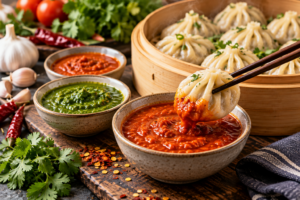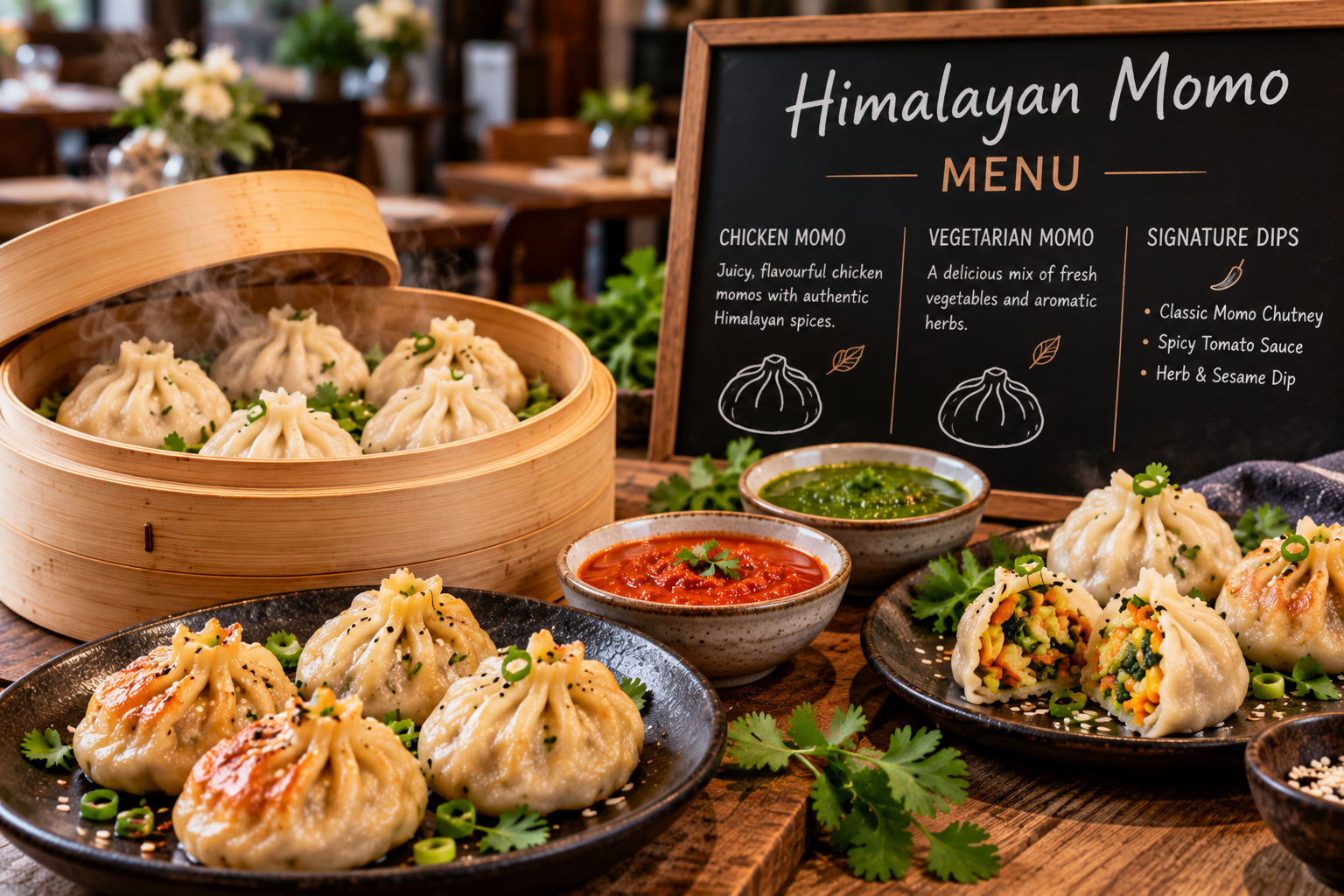
Adding momo to a restaurant or café menu can give customers something distinctive while keeping the offering flexible. These Himalayan-style dumplings can be served as a snack, starter, sharing plate or part of a broader meal. For food businesses considering a momo menu for restaurants, the key is to plan a menu that suits your customers, kitchen workflow and service style.
Rather than offering too many variations at once, start with a clear selection, think about how each item will be served and make sure staff can describe the options confidently. This guide covers practical considerations for building a momo menu that works for restaurants, cafés, food trucks and catering businesses in the UK.
1. Start with a Focused Momo Selection
A focused menu is often easier to manage than one with many similar options. Begin by deciding which core fillings you want to offer. Chicken and vegetarian momo provide a straightforward starting point because they give customers a choice between a meat-based filling and a vegetable-based alternative.
You can expand the selection later if customer feedback and sales show a clear demand for additional varieties. Keeping the initial range manageable can make stock planning, staff training and menu descriptions simpler, especially when momo is a new addition to the business.
2. Decide How Momo Will Fit into Your Menu
Before setting prices or portion sizes, decide what role momo will play in your menu. As a starter, a smaller portion can sit alongside other dishes. As a sharing plate, momo can be served in the centre of the table with dipping sauce. For a quick-service concept, a clear standalone portion may be easier for customers to order and enjoy.
The best format depends on your existing menu and customers. A café may want a compact snack or lunch option, while a restaurant could offer momo as one part of a broader selection. Food trucks and takeaway businesses may prioritise serving speed, packaging and ease of transport.
3. Make the Filling Options Easy to Understand
Menu descriptions should help customers make a decision quickly. State whether each option is chicken or vegetarian and describe the dish accurately without overloading the menu with unnecessary wording. If customers have questions about ingredients or allergens, staff should have reliable product information available rather than guessing.
Offering both chicken and vegetarian momo can make a menu more welcoming to mixed groups. Keep the options clearly identified during storage, preparation and service, and follow appropriate food-safety procedures to avoid cross-contact where relevant.
4. Treat Dipping Sauce as Part of the Experience
Dipping sauce can add heat, acidity and extra flavour to momo. Decide whether the sauce is included with each portion or offered as an optional extra, and make the arrangement clear on the menu.
For dine-in service, small sauce bowls can work well with starters and sharing plates. For takeaway orders, consider containers that close securely and are suitable for the journey. Consistency matters: customers should know what accompanies the dish and staff should be able to prepare each order the same way.
5. Plan Portion Sizes and Pricing Carefully
Portion size affects customer satisfaction, food cost and the way momo fits into the rest of your menu. Decide whether the portion is intended as a starter, snack, main item or sharing dish, then price it in line with your ingredients, labour, overheads and local market.
Avoid pricing only by comparing a competitor’s menu. Calculate the cost of the product and any accompanying sauce, packaging or sides, and allow for waste and service requirements. Review sales after launch and adjust portion sizes or menu positioning based on evidence rather than guesswork.
6. Make Sure the Kitchen Workflow Is Practical
A menu can look attractive on paper but still be difficult to deliver during a busy service. Before launching momo, map out how stock will be stored, how staff will prepare portions, what equipment is needed and how orders will move from kitchen to customer.
If you plan to use frozen momo, follow the supplier’s storage and cooking instructions, maintain appropriate temperature controls and train staff on the correct preparation process. Do not rely on assumptions about cooking times or storage life; use the product information supplied for the specific item.
7. Consider Supply Before You Launch
Reliable supply is important when a dish becomes part of a regular menu. Think about expected weekly demand, freezer capacity, storage space, delivery or collection arrangements, and how much notice is needed for larger orders. A clear process for reordering can help reduce the risk of running out during busy periods.
Before committing, confirm the supplier’s current minimum order quantities, prices, available varieties, product specifications and fulfilment arrangements. These details can differ between products and order types, so get confirmation directly rather than assuming one minimum applies to every item.
8. Train Staff to Explain the Menu
Staff should be able to explain the difference between the available fillings, how the momo are served and which sauces accompany them. They should also know where to find ingredient and allergen information. If they are unsure about a customer’s dietary question, they should check the documented information instead of offering an unverified answer.
A short menu briefing before launch can help the whole team use consistent descriptions. This is especially useful when momo are unfamiliar to some customers or when the menu includes both meat and vegetarian options.
9. Introduce Momo with Clear Menu Descriptions
A concise description should tell customers what the dish is, which filling it contains and how it is served. Avoid making unsupported claims about ingredients, dietary suitability or preparation. Good photographs can help customers understand the portion and presentation, but they should accurately represent the product being served.
If customers are unfamiliar with momo, a brief explanation that they are Himalayan-style dumplings can make the menu more accessible without taking up too much space.
10. Review Performance After Launch
After introducing momo, review sales, customer comments, preparation time and waste. Track which filling sells most, whether customers order the dish as a starter or main item, and whether the portion size works as intended. Ask staff where delays or recurring questions arise.
Use this feedback to refine the menu. You may discover that a small, well-executed selection works better than adding several new variations. If demand grows, then consider expanding the offer or discussing a more regular supply arrangement.
A Simple Momo Menu Example
A small starter menu could include steamed chicken momo, steamed vegetarian momo and a clearly described dipping sauce. If it suits your concept, you could also offer a fried momo option or pair the dumplings with another snack. Treat this as a planning example, not a fixed menu: confirm what your supplier offers and ensure the kitchen can deliver every item consistently.
For inspiration on products currently listed by Rema Kitchen, browse the Rema Kitchen shop menu. Availability and product details should be checked before using them in your own menu.
Questions to Ask Before Ordering Wholesale Momo
Which fillings and product formats are currently available?
What is the minimum order quantity for each product?
How are products stored and prepared?
What are the current prices and ordering lead times?
Is collection or delivery available for my location and order type?
Can the supplier provide product and allergen information?
How should repeat orders be placed?
Final Thoughts
A successful momo menu is not necessarily a large one. Start with a clear selection, make filling and sauce options easy to understand, plan portion sizes and kitchen workflow, and confirm supply details before launch. Once the dishes are on the menu, use real sales and customer feedback to decide what to improve or expand.
If you are a restaurant, café, food truck or caterer exploring a momo menu, you can learn more about Rema Kitchen’s wholesale options or contact the team to discuss your requirements.