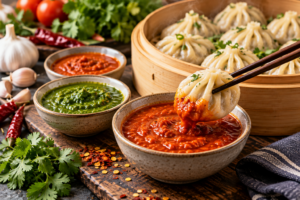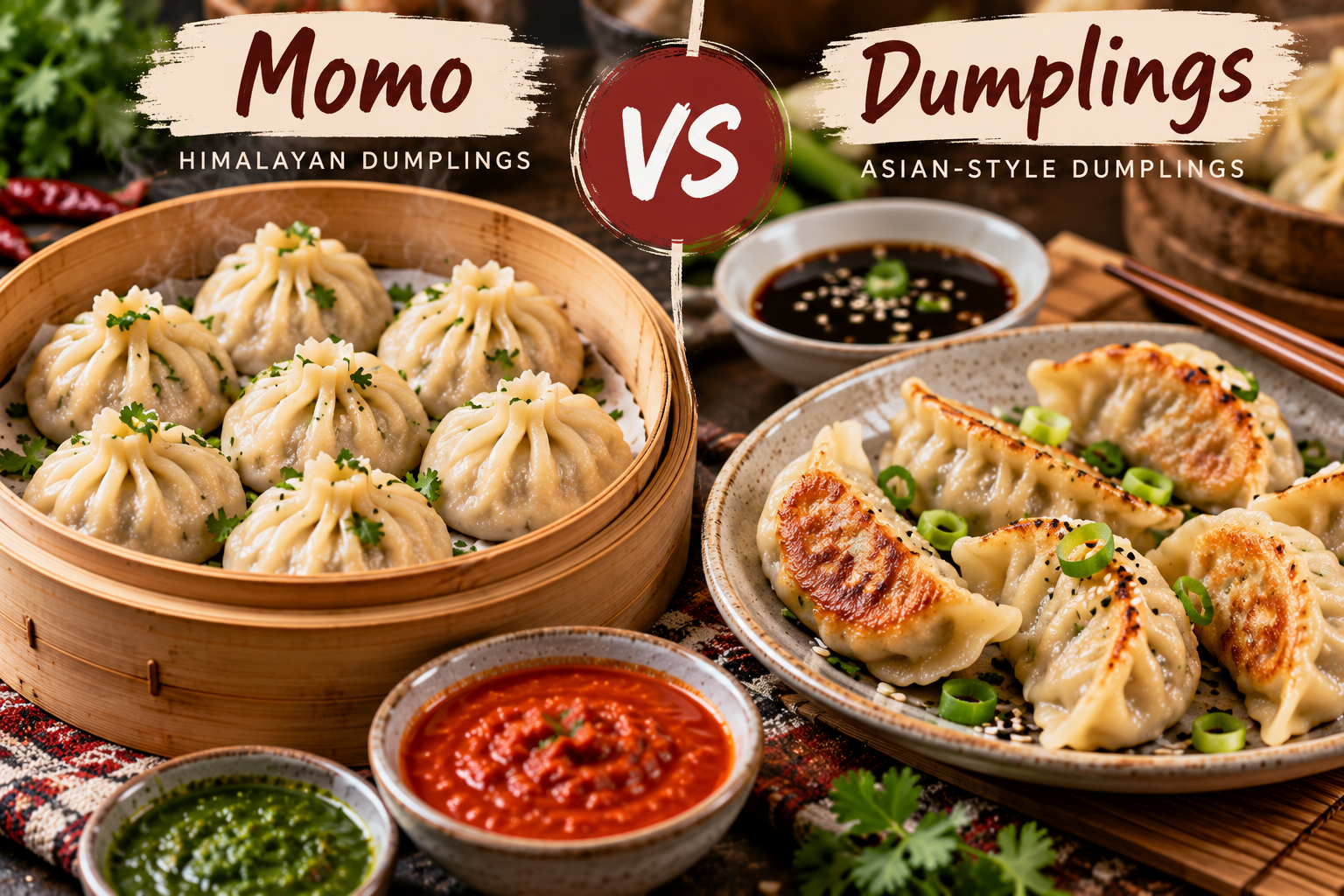
At first glance, momo and other dumplings can look very similar. Both often feature a wrapper folded around a filling, and both can be steamed, boiled, pan-fried or served with a sauce depending on the regional tradition. So, when comparing momo vs dumplings, the main difference is not that one is a dumpling and the other is not. Momo are a particular style of dumpling associated with Himalayan food cultures, with their own traditions, shapes, fillings and serving styles.
The word “dumpling” describes a broad family of foods found in many cuisines. Momo belong to that family, just as Chinese jiaozi, Japanese gyoza and other filled dough dishes have their own identities. Understanding these differences can help you choose what to try next and appreciate the variety within dumpling-based food.
Are Momo a Type of Dumpling?
Yes. Momo are a type of filled dumpling. The wider category of dumplings includes many dishes made by wrapping dough around a filling or preparing dough in small portions with other ingredients. Recipes and techniques vary between countries and regions, so there is no single wrapper, filling or cooking method that defines every dumpling.
Momo are closely associated with Nepal and the Himalayan region. They are commonly shaped into pleated parcels and served with a flavourful dipping sauce. To learn more about their background and place in Nepalese food culture, read Rema Kitchen’s guide to what momo is.
1. Origins and Food Traditions
One of the clearest distinctions is cultural context. “Dumpling” is a general term used for many foods around the world, rather than the name of one specific dish. Different communities have developed their own dumpling traditions, ingredients and ways of serving them.
Momo are particularly associated with Nepal and Himalayan communities, where they are enjoyed as a snack, meal or shared dish. Other dumplings may be linked with different culinary histories and local customs. These traditions influence the shape, filling, cooking technique and sauces that people expect with each dish.
It is worth avoiding the idea that all dumplings are interchangeable. Similar-looking foods can have distinct histories and preparation methods, and momo have their own identity within the broader dumpling family.
2. Shape and Folding
Momo are often recognised by their round, pleated shape, with the wrapper gathered and sealed at the top. Shapes can vary, but the folds are a familiar visual feature of many momo.
Other dumplings may be crescent-shaped, pressed into half-moons, folded into small parcels or formed using a different technique. For example, some Chinese dumplings are commonly crescent-shaped, while some Japanese gyoza are also folded into crescents and often feature a flat base for pan-frying.
Shape alone does not always tell you exactly what a dumpling is, because techniques overlap between cuisines. It is more useful to consider shape alongside the filling, cooking method and regional tradition.
3. Wrappers and Texture
Dumpling wrappers vary in thickness, elasticity and texture. Some are designed to remain soft and tender after steaming or boiling; others are suited to pan-frying, where the base can become crisp while the top remains softer.
Momo wrappers are commonly cooked by steaming, producing a tender outer layer that holds the filling. When prepared well, the wrapper should complement the filling rather than dominate it. The result is a balance between the dough and what is inside.
Because dumplings cover such a broad range of dishes, it is not accurate to say that all dumpling wrappers taste or feel the same. The ingredients, dough preparation and cooking technique all contribute to the finished texture.
4. Fillings: Meat, Vegetables and More
Both momo and other dumplings can have a wide variety of fillings. Depending on the cuisine and recipe, fillings may include meat, vegetables, seafood, tofu or a mixture of ingredients. Seasoning and texture vary just as much as the ingredients themselves.
Chicken and vegetarian momo are two familiar options for diners exploring the dish. Chicken momo offers a savoury meat-based filling, while vegetarian momo provides an alternative for people who prefer vegetable-based food. Different suppliers and recipes may use different ingredients, so check the product description if you have a dietary requirement.
If you would like to explore these two options, you can browse the current Rema Kitchen momo menu.
5. Cooking Methods: Steamed, Boiled or Pan-Fried
Cooking method has a major effect on the final dish. Steaming usually produces a tender wrapper without a browned crust. Boiling can create a soft, moist dumpling, while pan-frying can add a crisp base and a contrast in texture.
Momo are widely associated with steaming, although fried variations are also available. Other dumpling styles may be more commonly associated with boiling, pan-frying or other methods. There is plenty of overlap, however, so cooking method should be treated as a clue rather than a strict rule.
When preparing purchased momo, follow the cooking directions provided for that specific product. Fresh and frozen products can require different handling, so do not assume that the same timing applies to every dumpling.
For practical information about preparing frozen products, see Rema Kitchen’s frozen momo guide.
6. Sauces and How They Are Served
Sauces are another useful way to understand the difference between dumpling traditions. Momo are often served with a bold chutney or dipping sauce that adds heat, tang and aromatic flavour. Other dumplings may be paired with soy-based dips, vinegar, chilli oil or sauces associated with their own regional food traditions.
These are general patterns rather than fixed rules. Diners and restaurants often adapt sauces to their own tastes, and the same dumpling can be served with different accompaniments. The important point is that the sauce is part of the overall flavour experience, not just decoration.
If you are serving momo at home, offering chutney separately lets each person control how much they use. It also makes the meal easier to share when guests have different spice preferences.
7. Momo vs Gyoza vs Chinese Dumplings
These names are sometimes grouped together because they describe filled dough dishes, but they do not mean exactly the same thing.
Momo are associated with Nepal and Himalayan food cultures and are commonly steamed and served with chutney. Gyoza are Japanese dumplings influenced by Chinese jiaozi traditions and are often pan-fried, producing a crisp base with a softer upper wrapper. Chinese dumplings include several regional styles, with different shapes, fillings and preparation methods.
There is no single style that represents all Chinese dumplings, and cooking methods vary. Rather than ranking one as better than another, think of them as distinct dishes that offer different textures and flavour combinations.
8. Which Should You Try First?
If you are new to dumplings, start with the style that appeals most to your preferred flavours and textures. If you enjoy tender steamed dough and a savoury filling with a spicy dipping sauce, momo may be a good place to begin. If you prefer a browned, crisp base, you may want to try a pan-fried dumpling style as well.
Trying more than one type is a useful way to understand the differences. Pay attention to the wrapper, filling, seasoning, cooking method and sauce rather than judging the dish by its shape alone.
Momo can also work well as part of a shared meal. Serving chicken and vegetarian varieties gives diners a choice of filling, while a dipping sauce on the side lets everyone customise each bite.
9. Buying Momo in the UK
When buying momo in the UK, check whether the product is fresh or frozen, what fillings are available, how it should be stored and how it needs to be cooked. Read the product information carefully, particularly if you have allergies or specific dietary requirements.
It is also helpful to check the supplier’s ordering and collection or delivery arrangements before placing an order. Product availability and fulfilment options can vary, so use the current information provided by the seller.
You can view the current products listed in the Rema Kitchen shop. For questions about larger quantities or business supply, see the wholesale momo information or contact the team to confirm the details for your order.
Frequently Asked Questions
Are momo and dumplings the same thing?
Momo are a type of dumpling. “Dumpling” is the wider category, while momo refers to a particular style associated with Nepal and the Himalayan region.
Are momo the same as gyoza?
No. They are different dumpling styles with different culinary traditions. Momo are commonly steamed and served with chutney, while gyoza are often pan-fried, though preparation can vary.
Are all dumplings steamed?
No. Dumplings may be steamed, boiled, pan-fried or cooked in other ways depending on the dish and recipe.
What sauce is usually served with momo?
Momo are often served with a chutney or dipping sauce, but recipes and spice levels vary. Serving sauce separately lets diners choose how much they prefer.
Can momo have vegetarian fillings?
Yes. Vegetarian momo are available, but ingredients differ by recipe and supplier. Check product information if you need to confirm ingredients or allergens.
Final Thoughts
Momo are part of the wider family of dumplings, but their Himalayan identity, familiar pleated shape, filling styles and chutney accompaniments give them a distinctive place within that family. Comparing momo with other dumplings is less about finding a winner and more about appreciating how different food traditions use wrappers, fillings and cooking methods in their own ways.
If you are ready to try momo, explore Rema Kitchen’s current menu or contact the team if you have questions about products or orders.