
Momo may look simple, but making a satisfying dumpling involves much more than putting a filling inside dough. The wrapper, filling, seasoning, folding, cooking and final serving all influence the finished bite. This is one reason handmade momo UK has become an appealing choice for people who want something different from standard takeaway food.
When momo is prepared with attention to detail, you can notice the difference in the texture of the wrapper, the balance of the filling and the way the dumpling holds together. This guide looks at the features worth considering when choosing handmade momo in the UK, without focusing on one particular cooking method or filling.
What Does Handmade Momo Actually Mean?
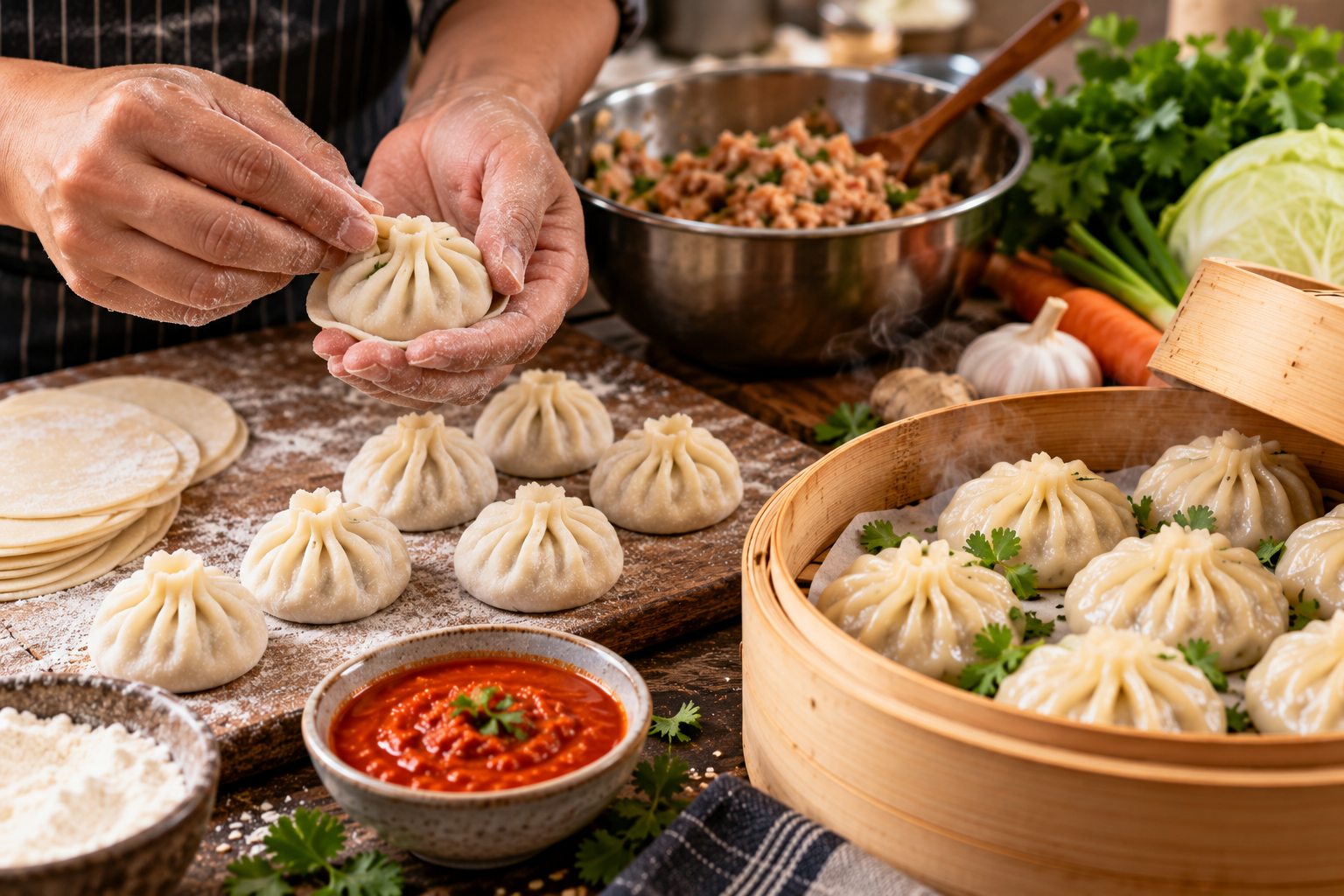
Handmade momo refers to dumplings that are prepared with hands-on attention during key stages of production. The dough is prepared, fillings are portioned and the dumplings are shaped individually rather than relying entirely on an automated process.
That does not mean every handmade momo has to look perfectly identical. In fact, small differences in folds and shape can be a natural part of hand preparation. What matters is consistency in the fundamentals: the wrapper should hold the filling securely, the filling should be properly portioned and the finished momo should cook evenly.
Rema Kitchen places emphasis on authentic homemade recipes, quality ingredients and careful preparation. You can learn more about the brand’s approach on the Rema Kitchen About page.
The Wrapper Makes a Bigger Difference Than You Might Expect
The wrapper is the part of the momo that holds everything together, but it also affects the texture of every bite. A wrapper that is too thick can dominate the filling, while one that is too thin may not provide the structure needed during cooking.
A well-prepared wrapper should complement the filling rather than compete with it. When steamed correctly, it should be tender enough to bite through comfortably while still holding its shape.
This balance is particularly noticeable when eating several pieces. A good wrapper helps the momo remain enjoyable from the first bite to the last rather than becoming heavy or overly doughy.
The Filling Should Have Its Own Character
The filling is where much of the flavour comes from. Whether the momo contains chicken or vegetables, the ingredients need to work together rather than simply provide bulk inside the wrapper.
For chicken momo, the filling should provide a savoury centre that works naturally with the wrapper and dipping sauce. Vegetarian momo can bring a different combination of vegetable textures and seasoning. Offering both gives diners the flexibility to choose according to their preferences.
If you want to compare the two styles, our guide to chicken momo and vegetarian momo can be a useful starting point when exploring the current Rema Kitchen selection.
Why Careful Folding Matters
The distinctive pleated shape of momo is not only part of its appearance. Folding helps close the wrapper around the filling and creates a dumpling that can be handled and cooked without falling apart.
Hand-folding also allows the person preparing the momo to check the filling and wrapper as each piece is shaped. Small variations in the folds are normal, while the important point is that the dumpling is properly sealed and ready for cooking.
For customers, this attention is often visible when momo arrive on the plate. Carefully formed dumplings have a crafted appearance that feels different from heavily processed or mass-produced food.
Fresh Ingredients and Balanced Flavour
Ingredients influence more than just taste. Their freshness, preparation and balance can affect the texture and aroma of the finished filling. Strong seasoning should enhance the main ingredients rather than overwhelm them.
This is particularly important with momo because the wrapper provides a relatively neutral base. The filling and accompanying chutney therefore have room to create the main flavour experience.
When choosing handmade momo, look for a menu or supplier that is clear about its ingredients and preparation rather than relying only on broad claims about authenticity.
Handmade Momo and the Eating Experience
One of the advantages of handmade food is that the experience can feel more considered. The shape, texture and balance of the dumpling become part of the meal rather than the food being treated simply as a quick snack.
Momo are also naturally social food. A plate can be placed in the centre of a table and shared, with each person choosing their preferred filling and amount of chutney. This makes handmade momo suitable for casual meals as well as occasions where food is part of the social experience.
How to Recognise Good-Quality Handmade Momo
There are several practical things you can look for when buying momo.
Appearance: The dumplings should look carefully formed and properly sealed. Natural variation is fine, but the wrapper should not appear excessively thick or poorly closed.
Wrapper: The wrapper should support the filling without becoming the dominant part of the bite.
Filling: The filling should be balanced and evenly distributed rather than leaving large areas of wrapper with very little filling.
Texture: When cooked correctly, momo should have a tender wrapper and a filling with a satisfying texture.
Flavour: The filling should have a clear savoury or vegetable character, with seasoning that complements rather than overwhelms the main ingredients.
Serving: A good dipping sauce should enhance the momo rather than cover up its flavour.
Handmade Momo for a Quick Meal
Handmade does not have to mean complicated. Momo can fit easily into a quick lunch, evening meal or casual weekend food plan. The key is choosing an option that suits the way you want to eat and preparing it according to the product instructions.
For customers buying from Rema Kitchen, the current shop menu includes handmade chicken and vegetarian momo alongside other Himalayan-inspired favourites.
Handmade Momo for Sharing
Momo are particularly easy to turn into a sharing meal. Instead of serving one large dish, you can place several portions in the middle of the table and let everyone take what they want.
For mixed groups, serving both chicken and vegetarian momo is a practical approach. Separate plates make the choices clear, while chutney served on the side lets each guest control the amount of heat.
If you are organising a larger event, Rema Kitchen can also discuss catering and larger order requirements directly.
Why Handmade Momo Can Be a Better Fit for a Food Business
For restaurants, cafés, food trucks and catering businesses, the appeal of momo is not limited to the customer. A focused momo offering can provide a distinctive menu item that is easy to serve in different settings.
Businesses also need consistency. Portioning, preparation and supply all matter when momo becomes part of a regular menu. A supplier that understands food-business requirements can make it easier to plan stock and maintain the same offering across service periods.
For businesses looking for larger quantities, Rema Kitchen’s wholesale momo supply provides a starting point for discussing supply requirements and order arrangements.
Authenticity Is More Than a Label
The word ‘authentic’ is widely used in food marketing, but customers can look beyond the label. Consider how the food is prepared, what ingredients are used, whether the menu explains the style of food clearly and whether the supplier provides useful information about its products.
For Himalayan-style momo, the overall combination matters: the dumpling shape, wrapper, filling, cooking approach and chutney all contribute to the experience. No single feature automatically makes a momo authentic.
What Makes Handmade Momo Worth Trying in the UK?
For people who have only encountered momo through restaurants or social media, trying handmade versions can be a useful way to understand why these dumplings have become increasingly popular. The appeal is not only their unusual shape but the combination of a delicate wrapper, flavourful filling and bold dipping sauce.
They are also versatile. Momo can work as a snack, part of a shared meal, a casual lunch or an addition to a wider menu. That flexibility makes them suitable for different eating occasions without losing their distinctive Himalayan character.
Questions to Ask Before Buying Handmade Momo
Is the momo handmade or produced using an automated process?
What fillings are available?
How are the momo prepared and served?
Is a dipping sauce available?
Are there options suitable for different dietary preferences?
Can the supplier accommodate larger orders if needed?
Is collection, delivery or another fulfilment option available?
Where to Start with Handmade Momo in the UK
If you are ready to try handmade momo, start with the filling you already enjoy or order a combination to compare different options. Chicken and vegetarian momo offer an easy introduction, while a selection of accompanying Himalayan-inspired dishes can turn the order into a fuller meal.
You can explore Rema Kitchen’s handmade momo menu to see the current selection. For questions about larger orders, catering or availability, contact Rema Kitchen directly.
Final Thoughts
Handmade momo stands out because the details matter. The wrapper, filling, folding, seasoning and preparation all contribute to the final bite. While small differences in shape are natural with hand-prepared food, the goal is a balanced dumpling that feels carefully made and enjoyable to eat.
If you are looking for handmade momo in the UK, focus on the quality of the ingredients, the preparation approach, the choice of fillings and the overall eating experience. With the right combination of momo and chutney, a simple dumpling can become a memorable part of a meal.


